
Embracing failure; creating space
Let's replace 'failure' with 'space to explore'
Linda Veenman
7/2/20252 min read
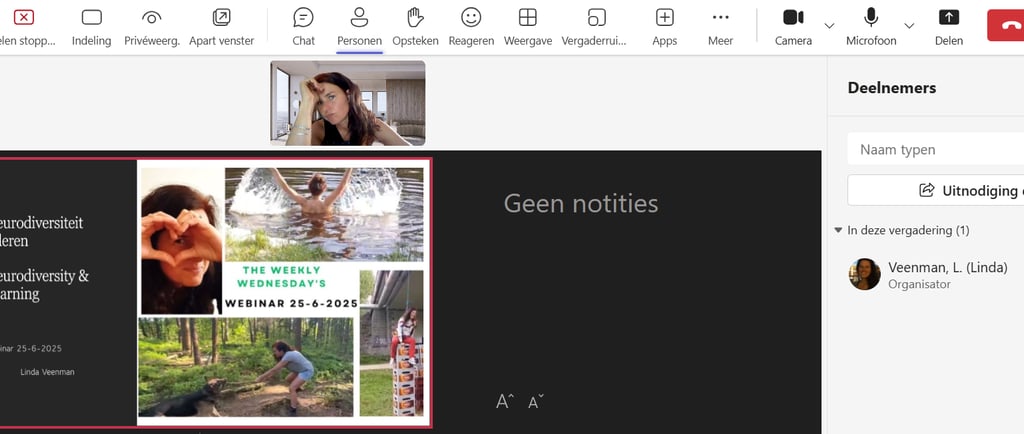
Is it failure when nobody attends?
You organize a webinar (or anything else similar in nature) and nobody attends. Have you failed? It sure feels like that.
Isn't anyone interested in what I have to say?
Is the topic boring or unclear?
Did I promote it wrong or insufficiently?
Or maybe, can we blame it on the weather: if it is a nice warm evening; who is going to sit at home and attend a webinar?
It is unlikely that no-one would be interested in what you have to say. Even if what you have to say is pretty boring, there will always be someone who finds it interesting. Pretty uplifting thought, right? Better at least than thinking you should quit, because no-one is interested in hearing from you. So you can talk yourself out of failure and into experience. Sure, you probably made a few mistakes and maybe, if there had been participants, they would have suggestions on how to do it differently. But even effort with no results is useful and branding it as failure is stopping the process short too soon.
Failure is a part of the process; or is it?
Is failure part of the process or is there no such thing as failure? If each failure we experience teaches us something about ourselves, our goals, and our approach to life, why would it be called failure? "Failure" is defined as "the state or condition of not achieving a desired outcome or not meeting expectations." But is this a correct definition? Most of life happens without yielding the desired outcome and often does not meet our expectations.
Neurodiverse? Adding 'fun' even more important!
For neurodivergent individuals, this process or 'failure' can sometimes feel even more daunting, especially because they tend of overanalyze, see everything that could go wrong and how it might not meet their expectations (or anyone else's), so why bother? An important element therefore should be fun. If something is fun, the pressure is taken off and opportunities for creativity and unconventional ideas open up.
That's why it's crucial to cultivate a growth mindset—believing that our abilities can evolve through effort and persistence and that the process along the way can be enjoyable! While rejection (whether real or just in your own mind) can feel difficult and demotivating, understanding that it’s merely part of the journey allows for a healthier relationship with setbacks.
Understanding Rejection Sensitivity
Many neurodivergent individuals experience Rejection Sensitive Dysphoria (RSD)—strong emotional responses to perceived rejection or failure. This is instilled in childhood, when they were often criticized for their natural behavior. Being 'too intense,' 'too active,' 'too difficult,' 'overly emotional,' etc. This sensitivity can make failures feel more profound and personal, often leading to an overwhelming sense of defeat. In a world that often equates success with self-worth, navigating failures can be particularly challenging.
As we navigate through life, let’s allow ourselves the space to explore. Let's stop calling it failing. Let's start calling it an adventure we're on that sometimes works out the way we want and sometimes doesn't.
The Art of Education
Self-education
Interested?
© 2024. All rights reserved.